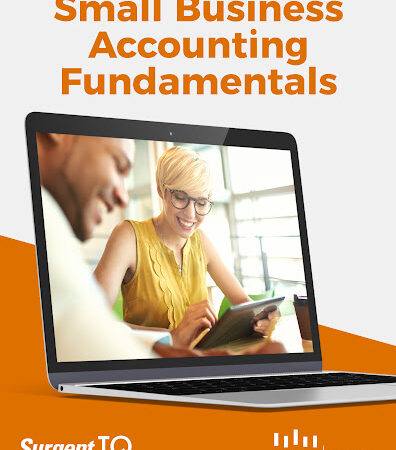
Small Business Accounting Fundamentals – Online Access Code
USD$ 149.00
Running any business requires expertise in a large and diverse set of areas: sales, marketing, creative, operations, finance. And in a small business, it’s not uncommon for a single individual to oversee them all. There’s a lot to it. A business can have the best product or service, but if the owner can’t manage cash flows or keep track of expenses, it will struggle to reach its potential. In a climate where nearly half of small businesses fail within the first 5 years, companies can position themselves for long-term profitability and sustainability with the proper accounting fundamentals. Small business success depends on you accurately knowing what your margins are on each of your offerings. Our fundamentals course prepares you to know your financials like you know the rest of your business, setting your business on a course towards long-term viability and profitability. Surgent IQ has partnered with AME Learning to offer this interactive training program that will concentrate on giving small business owners the financial literacy they need to price their product, understand their costs, and operate at a profit. Plus, an added focus on implementing successful business strategies that improve their viability, helping their business to not only survive, but thrive. Delivered through AME’s powerful learning software, AME Engage™, you’ll experience the hands-on, interactive Accounting Map™ tutorials that make small business accounting easy to understand. This 25 hour course will cover:
• Linking Personal Accounting to Business Accounting
• Fundamentals of assets, liabilities, revenue, expenses, owner’s equity
• The Accounting Cycle: debits and credits, making a journal entry, the general ledger, adjusting entries at the end of the accounting cycles, financial statements
• Cash and Internal Controls: bank reconciliation and petty cash
• Basics of payroll accounting, sales tax and various payable accounts
• The meaning behind numbers in financial statements, various financial ratios and how they affect your small business
• Decision-making with accounting information to help plan and control your business
• The relationship between cost, volume and profit
• Business strategies and measuring business performance